{A version of this piece in Greek will appear in a collection of essays entitled Silence in the Field of Culture, edited by Katerina Vourlioti and Despina Catapoti. I am grateful to the editors for the invitation to contribute as well as to the anonymous reviewer for the helpful comments.}
The, admittedly dense, thoughts in this text are a first attempt at an argument primarily from the perspective of the fiction writer than that of a philosophy professional.
There are many reasons, for which a fiction writer might self-censor, that is, limit or adjust what or how he writes contrary to his will or judgement.
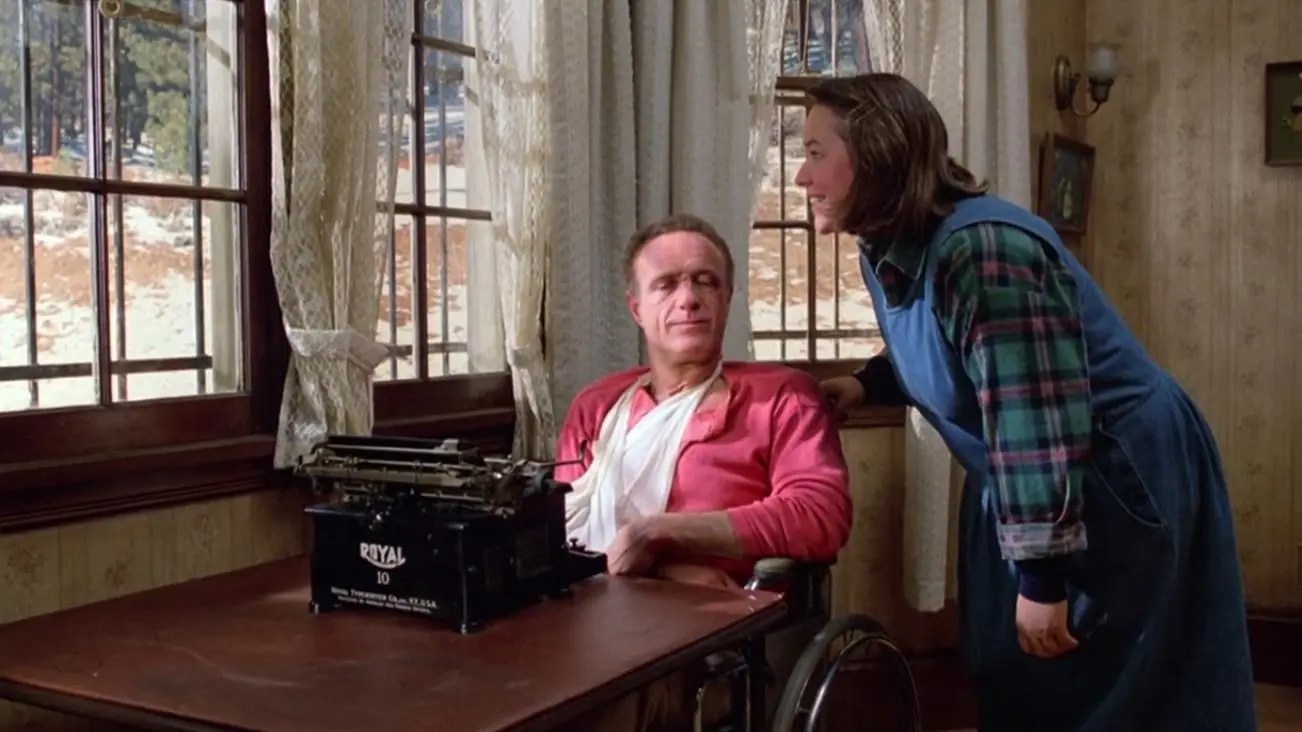
Perhaps his freedom or his physical integrity, or that of his loved ones, are under threat. Perhaps, for example, Annie Wilkes, his “number one fan” holds him captive and tortures him until he writes the book she demands, the book that will resurrect her beloved heroine Misery Chastain from his earlier work. Perhaps writing is his only livelihood and he will secure a decent income publishing a romantic novel, a genre he detests, rather than the psychoanalytic allegory he longs to write. Perhaps, if he reasonably criticises the genocidal practices of the State in which he lives, the damage will be such that he risks having his past writings censored, let alone his future ones.
There are also many reasons, for which one ought to resist self-censorship. Perhaps the reward for one’s honesty outweighs the harm one is threatened with. Perhaps one has made a promise to write exactly as one sees fit without making any concessions. Perhaps one is threatened by someone, such as one’s publisher, that one will suffer even more painful consequences if one censors oneself.
The question I want to probe, however, is whether any such objective reason arises from the practice of fictional writing itself.
Self-censorship is a kind of dishonesty. The self-censor conceals or distorts his or her belief about what is true. This in itself establishes the in principle demerit of certain forms of self-censorship. Journalists, for example, have a moral, and often contractual, duty to convey information that they believe to be true in good faith.
It is not at all obvious, however, that the same applies to fiction.
To be honest means to believe that what one expresses is true. This subjective element also presupposes something objective, namely that the utterance can be true. The truth value of the utterance depends on its correspondence with something external and objectively verifiable, whether this is an extralinguistic reality or some conventional criteria and so on (no need to take a stance here on what is the case). It follows that whether someone is honest depends on whether what they are expressing can be true.
The content of the literary work, however, does not correspond to anything outside itself. This can be easily understood in relation to literary genres such as fantasy but is equally true across the spectrum of fiction. Let us take the least obvious example, the stricto sensu historical novel, which we can define as the novel set in a historical period that precedes in time the author’s or readers’ consciousness. The factual framework of the historical novel refers to historical events. However, it is not true because and to the extent that it corresponds to those facts. Its genesis is contemporary with its description. This is why invented historical conditions, whether central or peripheral, have exactly the same force and belong among those based on real events.
Since, therefore, fictional speech cannot have a truth value, then the question of the duty of authorial honesty cannot even arise.
But let us approach fiction as a form of communication and ask whether the writer has any duty of honesty in order to communicate correctly to the reader.
J.L. Austin (1962) taught us that when speaking we do not describe the world but perform some linguistic acts. These are divided into three levels: the locutionary (what is said), the illocutionary (what action is performed), and the perlocutionary (what are the effects of the utterance?). Successful communication depends on the presence of certain conditions. For example, when someone says “I promise to cook for you tonight”, in order to perform the act of the promise, apart from the fact that the sentence must be satisfactorily formulated, the speaker must also know how to cook, there must be a kitchen, which he will be able to use and so on. And according to the development of the theory of linguistic acts by John Searle (1969), a further condition for the felicitousness of the promise is also the sincerity of the speaker, that he actually intends to cook.
However, the fictional discourse seems to lack illocutionary force altogether. When, for example, a fictional judge pronounces “I sentence you to ten years in prison” this has no sentencing effect, since even the minimal conditions for the success of the relevant speech act are not met.
J.L. Austin himself noted the particularity of literary speech from the beginning: “a performative utterance will be {…} hollow or void if is said by an actor on the stage, or if introduced in a poem, or spoken in soliloquy.” (Austin, 1962: 22) He adds, rather ungenerously, that “language, in such circumstances is in special ways – intelligibly – used not seriously, but in ways parasitic upon its normal use – ways which fall under the doctrine of etiolations of language.” (ibid.)
But what if Austin was not imaginative enough and he had in mind too narrow a range of speech acts? Richard Ohmann (1972) claims that literary discourse has a peculiar illocutionary force, which does not fall into familiar categories such as baptising or sentencing or promising. The illocutionary act of literary speech is cosmogonic, it creates anew a totality that did not exist before its utterance-performance. Thus, a court sentence is valid as such, that is, as an act, and not merely as an utterance of locutionary force, within the context of the novel. As not all the constitutive conditions of illocutionary acts are met, Ohmann adds that it is up to the reader to fill them in based on the implicit knowledge of what makes these acts felicitous. The construction of an imaginary world from works of fiction, Ohmann tells us, is precisely this give-and-take between author and reader through preverbal acts.
If Ohmann is right, then we may be provided with at least the beginning of an answer to the question at hand, that is whether the practice of literary writing provides any reason for the writer to resist self-censorship. If writing establishes such a direct relationship between author and reader, and indeed a relationship not only of communication but of collaboration, of participation in the fictional cosmogony, then the author, like the reader, is under a general duty of honesty.
However, at least two obstacles are raised. First of all, the platitude that the writer “communicates” with the reader is nothing more than a figure of speech. When Charlotte Brontë, in the voice of Jane Eyre, addresses herself directly “to the ‘reader,'” how is she addressing you reading her book in 2026, if for no other reason than at least because she wrote the invocation in 1846, perhaps even earlier, and died in 1855? That aside, what kind of communication is this, when the author has little choice over who reads her book, let alone any veto power?
But it is not only scale, spatial or temporal, that inevitably separates the author from the readership. The literary text per se is never addressed to anyone. Writers often say that when they write they have a model reader in mind. That is but a phantom of their own invention. The literary text is abandoned to the randomness of whether someone will read it, who will read it and how they will read it. This is why it makes no sense to dedicate a book to someone, because it eliminates this contingency. (You can, of course, write a book about someone thereby fulfilling a vow or declaring that you have reduced them to inspiration, that you have harvested their lives for the needs of your book). Letters and wills have an addressee. Because the author is no longer a performer but a creator and has now acquired an identity and because, at the same time, we have re-evaluated death as a definitive end and not as a transition to another field, we have come to believe that the work of fiction is also a letter or a testament. We are mistaken. One will say, what else are the books piled on the bookstore tables but an invitation to readers, to each and every one of them? Indeed, this is an offer not of the novel itself but of its reproduction. And to confuse the book as an object, which can be multiplied, with the novel itself, which is unique, non-repeatable, ends up objectifying the latter as something fungible.
Defending committed literature, Jean Paul Sartre (1948) argues that writing is always an appeal to the reader to transmute the author’s attempted revelation through language, an appeal to the reader’s freedom to contribute to the production of the literary work. However, if this is genuine creative freedom, then it is also unlimited, that is, the original text sets no barriers whatever. Otherwise, the reader acts unfreely, because he is either guided by the text or co-creates something that he rejects, perhaps even abhors. Consequently, being absolutely free, the reader replaces the author, obliterates him, abolishes him. Sartre believes that the dialectical relationship between writer and reader leads to an objectivity, even a radical, revolutionary one. But he has already rendered intersubjectivity unnecessary, he considers the text to be the only channel linking the two parties. When the author converses with the reader, for example at a book launch, then we have already jumped into the realm of literary criticism or, more often, commercial transaction. Sartre ends up, therefore, deifying the independent and self-sufficient subject. It follows that literature itself is abolished, as the text has no limiting power, its content is now determined solely by the imagination of each reader.
Let us assume, for the sake of the argument, that author and reader actually communicate and that the reader participates in the fictional cosmogony. Since the possibility of direct collaboration has been excluded or, when it happens, that is, when author and reader sit at the same desk and complete the myth, then they write together ex nihilo, an objective basis is required, from which the necessary implicit knowledge will be drawn and which guarantees the coherence of the novel. This basis is necessarily found within the novel. Even if something from the world outside of fiction is introduced, if, for example, one creatively reads a real historical or social condition, which is not already implied by the plot, in order for that to find its place, it must cohere with the rest of the elements of the text, both those that reflect real events and those that are completely invented. The myth absorbs and sets the conditions for the validity of any new information.
So far, it seems that the practice of literature does not force anyone not to self-censor. The author is free to suppress or falsify his beliefs because they are always outside the text. The only important correspondence, which must be maintained, is of the literary work to itself and its explicit as well as implicit aspects.
All this, however, under the condition, which until now I have implicitly accepted, that reading is a condition for giving meaning to the literary work. Or, according to Sartre (1948), even an ontological condition: without the act of reading, the literary object remains invisible, black marks on paper.
Yet, our instincts tell us that a work that was never read, a work whose pages the author might have smoked because he had run out of cigarette paper, like Bakhtin in the slightly distorted version of the real event, which Paul Auster used repeatedly in his work, did indeed have meaning not only as symbols or words but as a work of literature. A reasonable objection is that this is never possible, because the author is already, inescapably, the first reader of his work, even if he is also destined to be the last. The writing activity, however, is distinct from the reading activity. Reading presupposes a separation, even momentary, that writing lacks. The author and his work are identified at every stage of creation. If this is true, then our sense that a work of literature is still a work of literature, even if it remains forever unread, is well founded. And I would argue that this happens, because we realize, even subconsciously, that the condition of publicity of the literary work is not its reading but its historicity, that is, that it occupies a place in the totality of literary production, a place of interdependence and interaction. This becomes necessary not because the work is read, let alone because of the way in which it is read, but from the fact that it consists in a specific use of language, which is entirely and exclusively practical, that is, it does not expose but creates.
If it is inevitable that a work will be mutually determined by its literary environment, exactly how this will happen remains constantly uncertain, because, firstly, this environment cannot be completely known in advance (some works are hidden, others have been destroyed, the majority of them have not yet been written) and, secondly, it is never static. The fictional universe shapes itself, it is not determined by some external act of reading or criticism. Equally indifferent is the author’s intention. His subjectivity is not introduced into the fiction and does not affect its development.
We saw earlier that the work of fiction is exposed to the possibilities of either being forgotten or being read. We now find that it is also exposed to the randomness of its relationship with the rest of the fictional universe.
In writing, the author is faced with a sea of possibilities, with something incalculable and unpredictable, with a chaos that can only be experienced as emptiness. The writing has no starting point, that is, it is not imprinted as something pre-existing, and it has no destination. In this isolation, the question of whether someone should be honest loses its meaning. Since an asymmetry between belief and truth is impossible, and in the absence of a dialogical community as the recipient of honest or insincere utterance, then one cannot help but be honest.
This also implies the opposite, that honesty is a necessary condition of fictional writing. Here, then, arises the duty of the author not to censor himself. Except that it is not, as one might expect, a moral duty, as it might be a general duty of honesty, nor a condition of successful communication. It comes from the very nature of the practice of literature.
But what exactly does this duty amount to? What exactly does it mean to be honest as a writer? Nothing at present has reversed our earlier observation that fiction has no reflection on the world outside itself; on the contrary, this observation has been reinforced. Sincerity cannot, therefore, refer to the verifiable. And, since the literary environment always remains necessarily uncertain and dynamic, sincerity equally cannot refer to the coherence of the work with the fictional universe.
So the author’s claimed honesty can refer to himself and himself alone. The usually unbearable platitudes “be yourself” or “write what you know” find application here. To make fiction on its own terms, the writer must write what he believes he believes. In the bubble, in which he finds himself and creates, he must present himself, as he perceives himself and his work, rejecting external reasons, which could affect his writing consciously by imposing dilemmas on him.
The time has come, however, for me to admit something that may already be obvious to the reader, namely that I am misusing the word “honesty”, since it does not describe what we are trying to capture. As I have already mentioned but not emphasized enough, writing is an entirely practical activity. The author does not ascertain, does not announce, does not expose but acts. On the one hand, he creates the world of his own myth. On the other hand, he co-creates the fictional universe. What is required of him, then, is not epistemological honesty, that is, to reproduce and convey the truth of the thing outside of fiction. At the same time, he is not required to submit to ethical principles or rules, since his act does not have the necessary interpersonal impact nor can it bring about the consequences that ground such normative constraints.
The author gives a universal dimension to his overall experience, the way he perceives the natural world around him, his moral judgments, his views on the literary language. He imagines the world as consisting of all aspects of himself combined in various versions. To draw a parallel, the Kantian practice of universalising action-guiding maxims aims at the discovery of the moral law. Thus, the Kantian subject submits itself to the law that applies to everyone, it is identified with all other moral subjects. And if it is doubtful whether this is indeed a process of universalisation or if it is inescapably and excessively monological, there can be no doubt that the authorial subject presents itself as universal and imposes it as a natural and moral law, that is, it exists in a condition of absolute freedom.
This freedom, however, is accompanied by uncertainty, caused by the double contingency of the activity of fiction. We tend to deal with this kind of uncertainty and concomitant risks with a combination of epistemological and normative experiments, and settle for a transitory and precarious certainty based on intersubjectivity. Here, however, that path is not open. The only way out, then, is to turn to virtue. The author is asked to replace certainty with courage, to show the bravery to project himself onto a universal field.
The courage to present oneself exactly as one believes is the meaning of the classical concept of parrhesia. There is, however, a big difference. In its classical conception, parrhesia was owed to the community or to the parrhesia writer himself as a member of the community (Foucault 2016). If, as I have argued, the modern practice of fictional writing is unilateral, that is, the literary work has no recipient, and the duty of parrhesia stems from the very nature of fiction and if the central characteristic of the latter is its autonomy, then the writer does not owe this particular attitude to others because he is part of a community, he owes it to the mode of expression he undertakes, precisely because he isolates himself from the community.
The duty of parrhesia in fiction is incomplete. First, it is not activated until after someone starts writing fiction. In other words, it does not force anyone to write. Writers often say that they owe it to their art to write their next work, and that it would be a betrayal if they did not. Such dramatic statements only reveal an unbearable narcissism. Fiction writing itself does not engender any such obligation. Nor does the duty of frankness override the duty of other reasons. Each individual case requires weighing. If, for example, Annie Wilkes is swinging her axe over your leg, then you are probably justified in continuing the series of books starring Misery Chastain, even if what you produce is an aberration. But if you seek enrichment, then you are contributing unduly to the possibility of building a body of literary production that is not only autonomous but also completely alien to those who created it.
Austin, John Langshaw (1962). How To Do Things With Words. Clarendon Press
Foucault, Michel (2016). Discours et vérité précédé de la Parrêsia. Vrin
Ohmann, Richard (1972). “Speech, Literature, and the Space Between”. New Literary History, vol. 4, no. 1, pp. 47–63.
Sartre, Jean Paul (1948). Qu’est-ce que la littérature?. Gallimard.
John R. Searle (1969). Speech Acts: An Essay in the Philosophy of Language. Cambridge University Press.
You may not copy, reproduce, publish, display, perform, post, transmit, or distribute any part of the content of this blog in any form or by any means without express permission by the author.
Any questions? Get in touch!
Back to Books.
Back to Home

